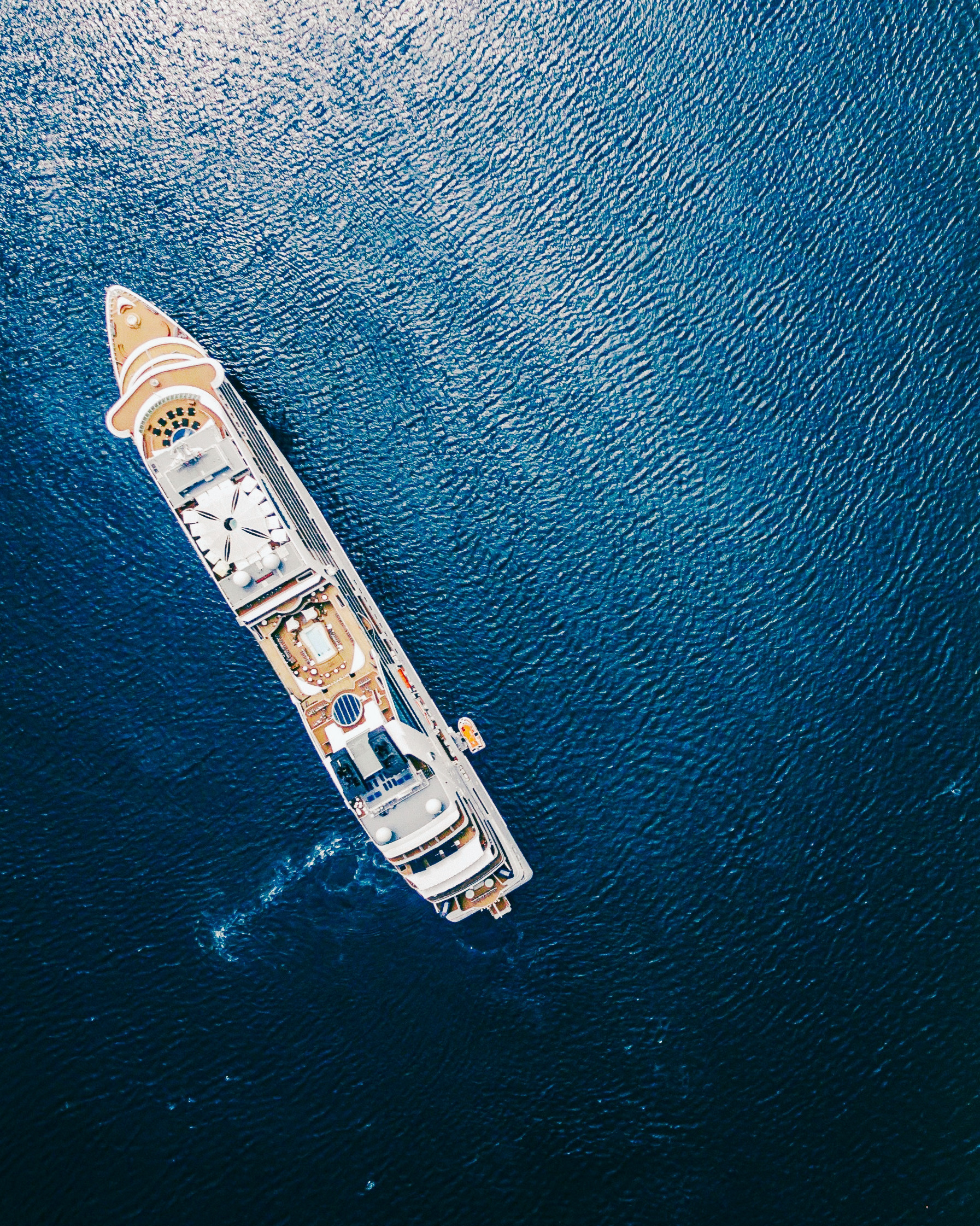
A small ship suits travelers who want access, quiet, and personal service. A large ship suits travelers who want variety, onboard entertainment, and a lively atmosphere. For most of the discerning travelers my team and I work with, the choice comes down to one question: how do you want to spend your days?
When clients tell us they are not “cruise people,” I completely understand. Most of us picture thousands of passengers, long lines at the gangway, and port days that feel like a group tour. A luxury small ship is a different way to travel. It feels closer to staying at a very good hotel that moves quietly to a new coastline while you sleep.
What is the difference between a small ship and a large cruise ship?
The difference is scale, and scale changes nearly everything about the experience.
| At a glance | Luxury small ship | Large cruise ship |
|---|---|---|
| Guests | About 100 to 1,300, depending on the ship | Several thousand |
| Ports | Small harbors, village quays, and anchorages | Major ports and large terminals |
| Going ashore | A few minutes, often by tender or on foot | Can take an hour or more |
| Service | Often close to one crew member per guest | Efficient, but rarely personal |
| Atmosphere | Quiet, social, and unhurried | Busy, with shows, casinos, and pools |
| What’s included | Most dining, wine, spirits, and gratuities | Many extras charged separately |
How small is a small cruise ship?
There is no single definition, and that is part of the confusion. In the luxury world, yacht-style ships carry up to about 400 guests, and the most intimate carry 100 or fewer. Small luxury ocean ships typically carry about 450 to 1,300 guests. Large mainstream ships carry several thousand.
The number of passengers matters less than how the ship feels, however. A well-run ship of 600 can feel more personal than a crowded ship of 200. That is why size is only the starting point when my team and I recommend a ship.
Is a luxury small-ship cruise worth it?
For the right traveler, yes. The value lies in everything you no longer have to manage. You unpack once and wake somewhere new each morning. Meals, the movement between destinations, and much of the daily logistics are handled for you. For couples and families who want to see several places in one trip without losing a day to each transfer, few ways of traveling are as efficient or as restful.
It is not the right fit for every trip. If you want four unhurried nights in one city, a hotel will serve you better. If you want late-night energy and a full calendar of onboard entertainment, a larger ship may suit you. Knowing the difference is where good planning begins.
What is included on a luxury cruise?
Most luxury lines include far more than mainstream cruises do. Inclusions vary by line, but you can usually expect the following.
- A suite, often with a balcony and butler or attendant service.
- All onboard dining, including specialty restaurants on most ships.
- Fine wines, spirits, and specialty coffees.
- Gratuities and Wi-Fi.
- On some lines, shore experiences, airfare, or hotel stays before and after the voyage.
The details between lines differ more than most people expect. A careful comparison before booking avoids surprises on board.
How do you choose the right luxury cruise line?
The lines can look alike in a brochure. They are not. Each has its own culture, and the right match depends on who you are and how you travel. When we match a client to a voyage, we start with a few questions.
- Who is traveling, and how do you like to spend a day?
- Do you prefer more time in port, including overnights, or more time at sea?
- Do you want a formal atmosphere or a relaxed one?
- Does food, wine, wellness, or discovery matter most to you?
- How much space do you want in your suite, and how much privacy on deck?
- Would a few nights in a hotel before or after the voyage make the trip feel complete?
The answers usually point clearly to one or two ships. From there, the suite, the season, and the itinerary fall into place.
Where is small-ship cruising at its best?
- The Mediterranean, including the Greek Islands, the Croatian coast, Sicily, and the French and Italian Rivieras.
- Norway and the Arctic, where small ships can reach narrow fjords and remote settlements. I’m excited to be sailing on this particular sailing to Norway next summer.
- Japan, where smaller ships reach coastal towns and islands that large ships cannot.
- Antarctica and the Galápagos, where small expedition ships are the preferred way to travel.
- Alaska’s Inside Passage, where smaller ships slip into quiet inlets and coves.
- The Caribbean’s smaller islands, such as St. Barts, the Grenadines, and the British Virgin Islands.
When should you book a luxury cruise?
Plan on 12 to 18 months in advance for the best choice of suites, and earlier for peak Mediterranean summers and expedition seasons. Small ships have a limited number of suites by design, and the most sought-after categories go first. Late openings do appear, but they rarely include the suite or date you would have chosen.
Shoulder seasons are worth considering. In the Mediterranean, May, June, September, and October offer warm weather with fewer crowds.
Should you use a travel advisor for a luxury cruise?
For a luxury voyage, the value of an advisor is less about price and more about value and judgment. The distinctions between lines are subtle, and they rarely show up in marketing materials. We know these ships, the destinations, and which itineraries deliver what they promise.
As a Virtuoso-affiliated advisory, we can often include added amenities on select sailings, such as onboard credit or a private shore experience. We also coordinate the pieces around the voyage: flights, transfers, and hotel stays before and after. If plans change, you have someone advocating for you.
Frequently asked questions
How many passengers does a small cruise ship carry?
Luxury yacht-style ships carry up to about 400 guests, and the most intimate carry 100 or fewer. Small luxury ocean ships typically carry about 450 to 1,300. Large mainstream ships often carry several thousand.
Are luxury small-ship cruises all-inclusive?
Most are. Fares on luxury lines typically include suites, dining, fine wines and spirits, gratuities, and Wi-Fi. Some also include shore experiences and airfare. Inclusions vary by line, so it is worth confirming before you book.
Will I feel the motion more on a small ship?
You may feel more motion on a smaller ship in open water. Most modern luxury ships have stabilizers, and choosing a calm-water region and season, such as the Mediterranean in early summer, makes a noticeable difference.
Is there a dress code on a luxury small ship?
Most lines have relaxed daytime dress and elegant casual evenings. A few hold occasional formal nights. Few require a tuxedo or gown.
Are small-ship cruises good for families?
Yes, especially for multigenerational families with older children and teens. The intimate scale makes it easy to stay connected. Families with young children should choose a line with family-friendly programming, since many luxury small ships do not offer kids’ clubs. We can help identify lines that would be good options – and those to avoid.
Can you charter an entire small ship or yacht?
Yes. Many yacht-style and expedition ships can be chartered for family milestones, reunions, or private groups. Charters are usually planned well over a year in advance.
Planning a luxury small-ship cruise? We match discerning travelers with the right ship, suite, and season, and we handle every detail around the voyage with care from the first conversation.